Your cart is empty
Soft Turkish cotton towels and robes are waiting for you.
Shop Best SellersBrowse all collections
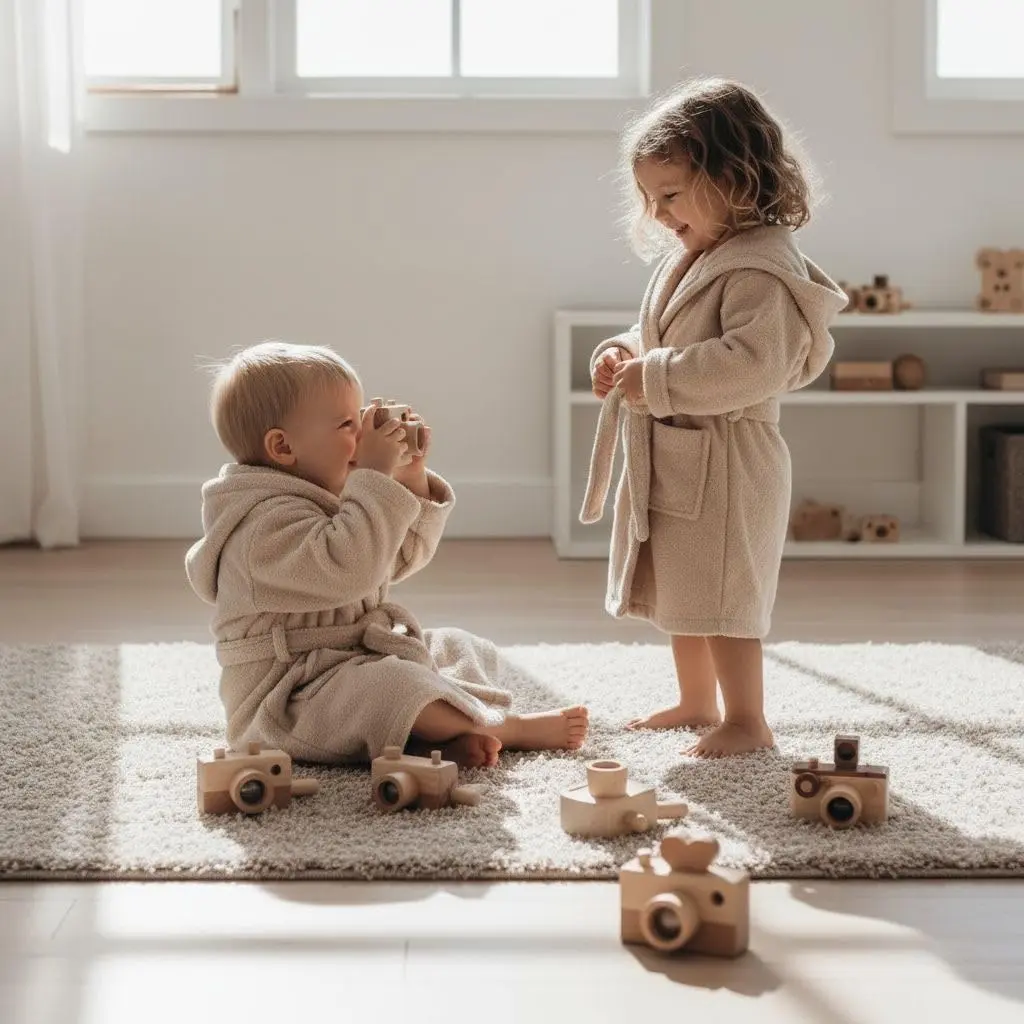
This kids bathrobe guide compares organic cotton and fleece so you can choose the right robe for your child. Both fabrics work well for kids, but they suit different climates, skin types, and daily routines.
Children have more sensitive skin than adults, so fabric choice matters more for kids’ robes than it does for yours. A rough or synthetic robe can irritate a child’s skin after a bath, while the wrong warmth level leaves them shivering or overheated.
This kids bathrobe guide breaks down the two most popular options at Bagno Milano: organic cotton and fleece.
Our organic cotton kids robes use GOTS-certified cotton, grown and processed without harmful chemicals. For families who care about what touches their child’s skin, this certification matters.
Organic cotton absorbs water quickly after a bath or swim. It also breathes well, so kids don’t overheat indoors. If you want to understand what GOTS certification actually covers, read our GOTS certification guide.
Our fleece kids robes trade some breathability for extra warmth. The plush fabric holds heat well, which makes fleece a strong pick for cold bathrooms and chilly winter mornings.
Fleece also dries faster than cotton terry, so it works well for families who bathe kids right before bed and want them warm quickly.
This kids bathrobe guide recommends starting with climate. Consider your climate first. Warmer regions and year-round humidity favor organic cotton, since it breathes and won’t trap heat. Colder climates and drafty bathrooms favor fleece.
Next, think about your child’s skin. Kids with eczema or sensitive skin generally do better in organic cotton because it’s naturally hypoallergenic and free of synthetic fibers.
Finally, factor in how the robe gets used. A robe for after-swim wear should prioritize absorbency, which points to cotton. A robe for lounging on winter mornings points to fleece.
When your child is between sizes, size up. Kids grow quickly, and a slightly larger robe still gets a full season of wear.
Choose a robe with a secure, comfortable sash rather than a tie that can slip loose. Check that hoods, if included, fit snugly without excess fabric that could catch on furniture.
Avoid robes with loose decorative trim or long dangling ties, especially for younger children. All Bagno Milano kids robes use child-safe construction with secure stitching throughout.
Wash organic cotton robes in cool or warm water to preserve softness. Wash fleece robes on a gentle cycle and skip fabric softener, since it reduces fleece’s loft over time.
Both fabrics hold up well to frequent washing, which matters for kids’ robes that see near-daily use.
Organic cotton. It’s naturally hypoallergenic and free from the synthetic fibers that sometimes irritate sensitive skin.
Kids’ robes use the same basic construction as adult robes, just scaled down with safer, more secure closures.
Most families replace kids’ robes every one to two years as children grow, though the fabric itself can last much longer.
Written and reviewed by the Bagno Milano Editorial Team, specialists in Turkish cotton textiles and home spa essentials.


Join the list and get 10% off your first order, plus be the first to hear about new arrivals.