Your cart is empty
Soft Turkish cotton towels and robes are waiting for you.
Shop Best SellersBrowse all collections
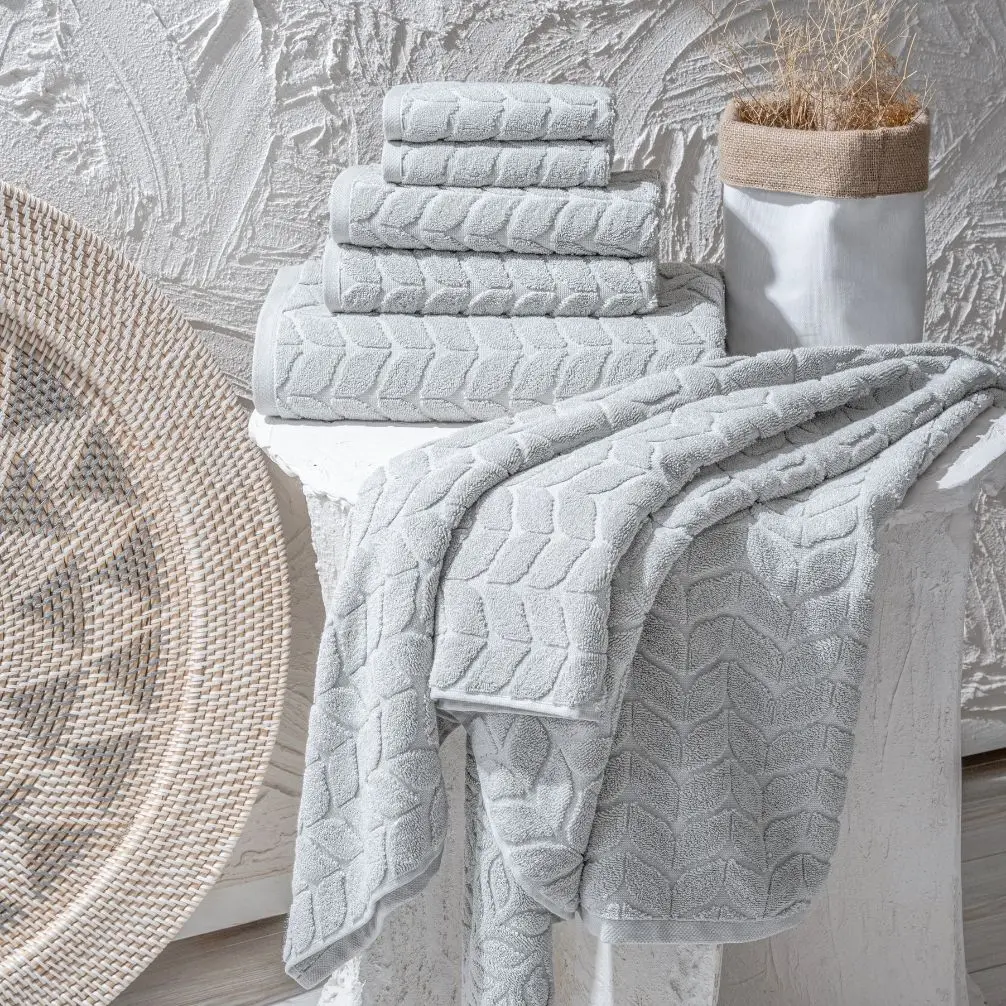
Jacquard towels get their signature pattern from the loom, not from printing or embroidery. The loom weaves the design directly into the fabric. That gives them a raised texture and a durable, hotel-quality look. Here’s what makes them different, how to choose one, and how to keep them looking sharp.
Most towels get their pattern from dye or embroidery sitting on top of the fabric. Jacquard towels work differently. A special loom weaves the border or motif directly into the cotton as the towel is made. That construction survives hundreds of washes without fading, cracking, or peeling. The pattern can’t come off, because it’s part of the weave itself.
Elevated look: The woven borders and motifs give these towels a polished, hotel-collection feel that plain terry towels don’t match.
Durability: Since the loom weaves the pattern in, it survives repeated laundering far better than printed or embroidered designs.
Absorbency: The dense weave still delivers the soft, absorbent feel you expect from a quality cotton towel.
Versatility: They dress up a guest bathroom while working just as well for everyday use.
Look for a high cotton content — ideally Turkish or Egyptian cotton. That’s what gives the weave its softness and long-term durability. Check the gram weight, or GSM. Heavier towels in the 500-700 GSM range tend to hold their shape and pattern best over time. An OEKO-TEX Standard 100 certification is also worth checking for. It confirms the fabric and dyes are free of harmful substances.
Wash in warm water with a moderate amount of detergent, and skip fabric softener. It coats the fibers and dulls both the pattern and the absorbency. Tumble dry on low, or line dry, to protect the weave. Avoid chlorine bleach, which breaks down the fibers holding the pattern together over time.
In conclusion, jacquard towels combine a woven-in design with everyday durability. That makes them a step up from plain terry towels, without sacrificing softness or absorbency.
Ready to see the weave for yourself? Shop our Auraline Jacquard Towels, Luxury Jacquard Towels, and Organic Luxury Jacquard Border Towels, or browse our full Towels collection. Prefer the same weave in a robe? Take a look at our Luxury Jacquard Robe.
Jacquard is a weaving technique, not a fabric type — it refers to how the pattern gets into the towel. A jacquard loom uses a punch-card or digitally controlled mechanism to raise and lower individual warp threads independently, which lets the weave itself form a pattern, border, or motif rather than printing or embroidering one onto a flat surface afterward. Because the design is woven directly into the structure of the fabric, a jacquard pattern does not crack, peel, or fade the way a printed design can, and it remains visible and tactile on both sides of the towel.
Shoppers often see these three decoration methods side by side, and they perform very differently over time:
For a towel that needs to keep its decorative pattern looking sharp for years, jacquard weaving is generally the most wash-durable choice of the three.
Jacquard towels commonly come in a few recognizable pattern families: classic border patterns (a woven decorative band near the hem, often in a contrasting color), damask-style florals and medallions for a more traditional, hotel-classic look, and geometric or striped patterns for a more modern aesthetic. Because the weave holds up so well, jacquard towels and robes are a popular choice for hospitality settings — hotels and spas favor them precisely because the branding or pattern stays crisp through commercial-frequency laundering, and the same durability carries over to home use.
Do jacquard towels feel different from plain towels? The woven pattern can add subtle texture in the patterned areas, but a well-made jacquard towel uses the same absorbent terry loops in the body of the towel, so overall softness and absorbency are comparable to a plain towel of the same GSM and cotton quality.
Will the jacquard pattern fade over time? Because the pattern is woven rather than printed, it will not crack or peel, though like any cotton textile, very frequent high-heat washing and drying will gradually soften and lighten the overall fabric color over years of use.
Are jacquard towels more expensive than plain towels? Jacquard weaving is a more complex loom process than a plain weave, so jacquard towels typically carry a modest price premium over unpatterned towels of similar cotton quality and weight.
Jacquard towels benefit from slightly gentler laundering than plain terry towels because their raised woven patterns have more surface texture to snag and wear. Washing in warm rather than hot water helps preserve the sharpness of the pattern over time, and skipping fabric softener keeps the yarn loops open and absorbent instead of coating them with a residue that flattens the texture. Turning jacquard towels inside out before washing reduces friction on the patterned face, and tumble drying on low or medium heat prevents the woven design from puckering. With reasonable care, a well-made jacquard towel keeps its pattern crisp and its color saturated for years, which is part of why it commands a higher price than a plain-weave equivalent.
Written and reviewed by the Bagno Milano Editorial Team, drawing on our experience sourcing and selling organic Turkish cotton jacquard towels and robes.

Join the list and get 10% off your first order, plus be the first to hear about new arrivals.